“It actually shows all of that?”
The question came up so often that it became the line of the weekend.
In early June, we packed our sensors into the car and drove to Balsthal, Switzerland, for the 2026 Student Riding Nations Cup. Twelve teams had arrived for dressage, show jumping, and one of the most unusual tests in equestrian sport: riding horses they had never met before.
For HorseCare, it was exactly the kind of setting we wanted.
A few minutes to find a partnership
Most riders go to a competition with months or years of shared history. They know how their horse warms up, which side needs more time, how a normal stride feels, and when a small change is worth paying attention to.
At the SRNC, none of that history comes with you.
The horses are provided for the competition and allocated by draw. Riders get only a short preparation period before entering the arena. They compete against other riders on the same horse, so the result is not simply about drawing the best mount. It is about who reads the horse best and adapts most effectively.
That changes the way you ride. There is no time to force a familiar routine. You have to listen, make decisions quickly, and find a rhythm that works for the horse underneath you.
The format also puts good horsemanship in plain view. In the early jumping rounds, judges look at position, confidence, fluency, use of the aids, and the rider’s effect on the horse. Speed is not the whole story. Fairness and respectful handling are part of the competition itself.
That was one of the reasons we were proud to support the event.
What data can add to feel
A skilled rider can learn a lot from a horse in a few minutes. Even so, the saddle gives only one view.
HorseCare adds another view.
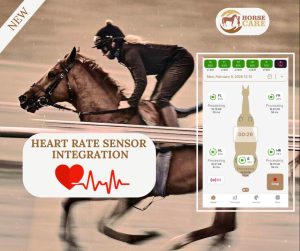
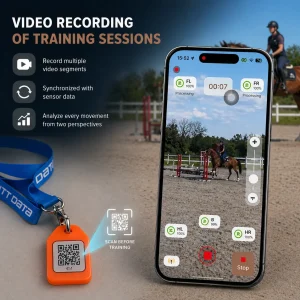
The system uses five small sensors, four fitted above the fetlocks and one placed on the saddle pad over the horse’s back. During a session, they record the way each leg moves and loads. The app turns that information into a clearer view of gait, symmetry, balance, workload, and changes during training.
The most useful part develops over repeated sessions. HorseCare learns the individual horse’s normal movement pattern and builds a baseline. That matters because no two horses move in exactly the same way. Comparing every horse with one generic idea of “normal” can miss important context. Comparing a horse with its own established pattern is much more useful.
Once the baseline is in place, the system can flag small movement changes that may deserve a closer look. A horse can begin to shorten a step, alter a limb trajectory, or shift load before there is an obvious limp.
Those signs are not a diagnosis, and HorseCare does not replace a veterinarian. The purpose is to give owners, riders, trainers, and vets another piece of information, early enough to investigate before a quiet change becomes a bigger problem.
28 riders put HorseCare to the test
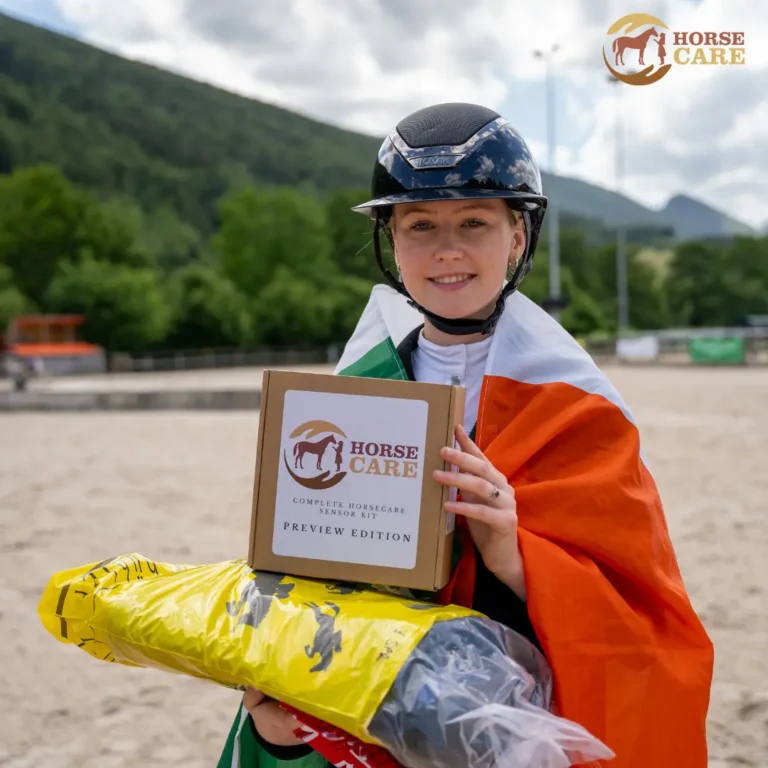
Over the weekend, 28 riders tried the system.
Balsthal made for a demanding demonstration because these riders were not sitting on horses they knew. They had no training history to study and no familiar feeling to compare with. They had the ride they had just completed, followed by a second view through the data.
After each session, riders looked through the results with us. They compared what they had felt in the saddle with what appeared in the app. They asked about left and right symmetry, workload, changes between gaits, and what a longer history could reveal.
Then came the question we heard again and again:
“It picks up that?”
Yes, it does.
The best part was not simply showing more numbers. It was watching the numbers start better conversations. A rider would point to something they had felt through a turn. Someone else would ask whether an imbalance appeared throughout the ride or only at one gait. The data gave them a way to test their impressions and ask more precise questions about the horse.
Horse welfare is part of good performance
What stayed with us most was how closely the SRNC connected good riding with care for the horse.
Riders had to adapt without forcing. The competition rewarded tact, balance, confidence, and the ability to help an unfamiliar horse perform comfortably. The horses were not treated as equipment. They were the centre of the event.
That is close to our own philosophy. Better information should not take horsemanship out of riding. It should help people pay closer attention.
HorseCare is not there to tell a rider what to feel. It records what can be hard to see, builds a movement history for the individual horse, and helps the team make better informed decisions.
We came to Balsthal with our sensors and left with thoughtful feedback, new friends, and an even stronger belief in what happens when feel and data work together.
Thank you to the Swiss Student Riders, the horse owners, volunteers, officials, riders, and everyone who made the event possible.
Twelve nations, three days in the arena, 28 sensor tests, and one shared priority: the horse.